Friday, 23 September 2011

The Power of the Pence

 “The days are dark and fateful. As a nation we carry on under the devastating realities of a world at war…our Hospitals, more than ever as sanctuaries of healing and restoration, are prepared to render the uttermost service to the maimed and injured, thus saving lives and bringing immediate relief to stricken humanity…Meanwhile, the call comes to all within the Infirmary’s region and sphere of service to help to sustain this great work on the home-front in keeping with the courageous spirit of the times”.

You may have guessed that Russell Paton’s Communications Team didn’t ask him to condense his message into 140 characters or less. Thankfully the Organising Secretary of the Royal Infirmary of Edinburgh wasn’t tasked with communicating to the Twitter generation but with writing a foreword for ‘Our Record of Service’, a souvenir brochure published by the Hospital in 1941 which we have accessioned into the Archive this week. 

Front Cover

At that time “the largest voluntary hospital in the Empire”, it published this booklet to celebrate its efforts on the home front during WW2 and to encourage readers to contribute to its funding. At a time before the introduction of the National Health Service, all of the pennies raised counted. 

Appeal for donations
Priced at 6 pence “or whatever more you can afford”, it contains messages from the Lord Provost, the Board of Managers, nursing and medical staff about the importance of the Hospital within Edinburgh and Scotland. The articles describe the work of the League of Subscribers, the numbers of patients treated annually and where they came from. Alongside these are beautiful illustrations, including a cartoon by the notable artist Tom Curr. There are poems and even a look at what the future maternity services of 1991 might look like. If you’d like to view the booklet, or any other parts of our collections, please contact us.

Friday, 16 September 2011

LHSA says au revoir to one of our long-standing volunteers

This week Mariko Wanatabe leaves her volunteer position with LHSA after working with us for a day a week since March 2010. In that time Mariko has been trained by Ruth, the Paper Conservator, in basic cleaning, repair, pressing and re-housing techniques and has worked on a wide range of LHSA collections under Ruth’s supervision.

Mariko has helped check and house new accessions, and provide long-term storage for some of the objects. She has surface cleaned, repaired and re-housed architectural plans, and humidified and pressed loose sheet hospital staff records, which have then gone on to be catalogued.

Mariko repairing an architectural plan
Mariko’s volunteer work has provided her with some excellent experience for her future career in conservation and has also helped support one of our core services – ensuring that the collection remains in good condition and is accessible for future research.

Mariko leaves us to take up a place at West Dean College to train to be a book conservator – we wish her all the best and hope to see her again when she is next in Edinburgh!

We’re also delighted to announce that the ‘Unsung Heroes’ exhibition in the CRC’s display wall has been extended until 28 October 2011. New artworks by Edinburgh College of Art staff and students are exhibited alongside the items from LHSA’s collections that inspired them. The exhibition is free, and open 9-5pm Monday to Friday in the Centre for Research Collections (Edinburgh University Main Library, 30 George Square, EH8 9LJ).

Friday, 9 September 2011

Dental Hospital Photographs

We have recently completed the cataloguing and re-housing of a folder of photographs from the Edinburgh Dental Hospital and School (our ref: LHB25). These mainly date from the 1950s and feature a variety of views of, what were then, brand new facilities in Chambers Street. Each photograph has been described and given a reference number in a catalogue. The photographs feature dental treatment rooms, lecture theatres, the waiting room and a great variety of medical equipment. 

The Dentist's Chair
The images present efficient, clinical workspaces and a distinctive feature is the use of frosted glass screens to enable as much natural light through as possible, whilst retaining privacy for the dentist and patient. A Dental Hospital and School was established in 1878 in Brown Street, now Chambers Street, by the Edinburgh Dental Dispensary in co-operation with the Scottish Dental Education Committee, and apart from a move to Lauriston Place from 1889-1894, remained on this street until its closure in 1994. To conserve the photographs, each one has been placed in a protective polyester-based Melinex© sleeve within an acid free archival box, with the reference number attached to each sleeve. In this way the photographs can easily be accessed and identified when an enquirer requests an image on a particular subject.

Frosted glass screens provide privacy for patients

Friday, 2 September 2011

Engaging with our archive peers & the wider community: looking backwards, moving forwards


This week has seen the Archives and Records Association annual conference taking place in Edinburgh. The theme is ‘advocating for archives and records’, a highly relevant topic in this time of cutbacks. LHSA staff have all attended at least one day of the conference and found the presentations to be stimulating and thought-provoking. It was great to see how archives across the world are engaging with their users, arguably advocating the importance of their records through both traditional means and new social media, creating a community of users who in turn value and advocate for the archives. One of the key messages from a duo of French archivists was that in this age of information overload, an archivist’s skills of finding the right thing at the right moment are more relevant than ever. 


Nurses in the Florence Nightingale Nurses' Home, Royal Infirmary of Edinburgh
Tomorrow, Laura will be presenting a talk to a group of nurses celebrating the 55th anniversary of the day they started their training at the Royal Infirmary of Edinburgh on the 3rd of September 1956. Her talk will cover a brief introduction to the Archive, followed by a look at the history of nursing in the hospital. It will feature an excerpt from a silent film called ‘The Ever Open Door’, made in 1938 to raise funds for the hospital in the days before the advent of the NHS. You can see the film in full by visiting our website: The Ever Open Door

Friday, 26 August 2011

Old archives and new artworks

Our year-long ‘Unsung Heroes’ project is coming to a close with a new exhibition in Edinburgh University Main Library. This showcases historic badges from LHSA’s collections, and artworks from Edinburgh College of Art (eca) students and staff that have been inspired by them, before permanent display in the Royal Infirmary of Edinburgh.

The 'Unsung Heroes' exhibition
The exhibition is in the reception of the Centre for Research Collections, on the sixth floor of the Library ( 30 George Square, Edinburgh, EH8 9LJ). Entrance is free, and the exhibition will run until 24 September 2011. It’s a great opportunity to see some of our collections and some beautiful pieces of enamel work by talented artists. You’ll also get the chance to look at a selection of their sketchbooks and preliminary pieces to see how the design process evolves.

New artwork and several of our badges on the top shelf and a sketchbook below
The project has also had an oral history element – retired and current Royal Infirmary nurses have been interviewed and their stories have helped the creation of new pieces by our eca partners. The testimonies will come to us once the project is finished. For those of you with smartphones, extracts are available via QR tags in the exhibition.

‘Unsung Heroes’ has been a fascinating project to be involved with. For more information please see the project page on our website (Unsung Heroes project page). It has brought the Archive to a new audience and the collections have been used in exciting new ways as a result.

Friday, 19 August 2011

Charting our cataloguing progress


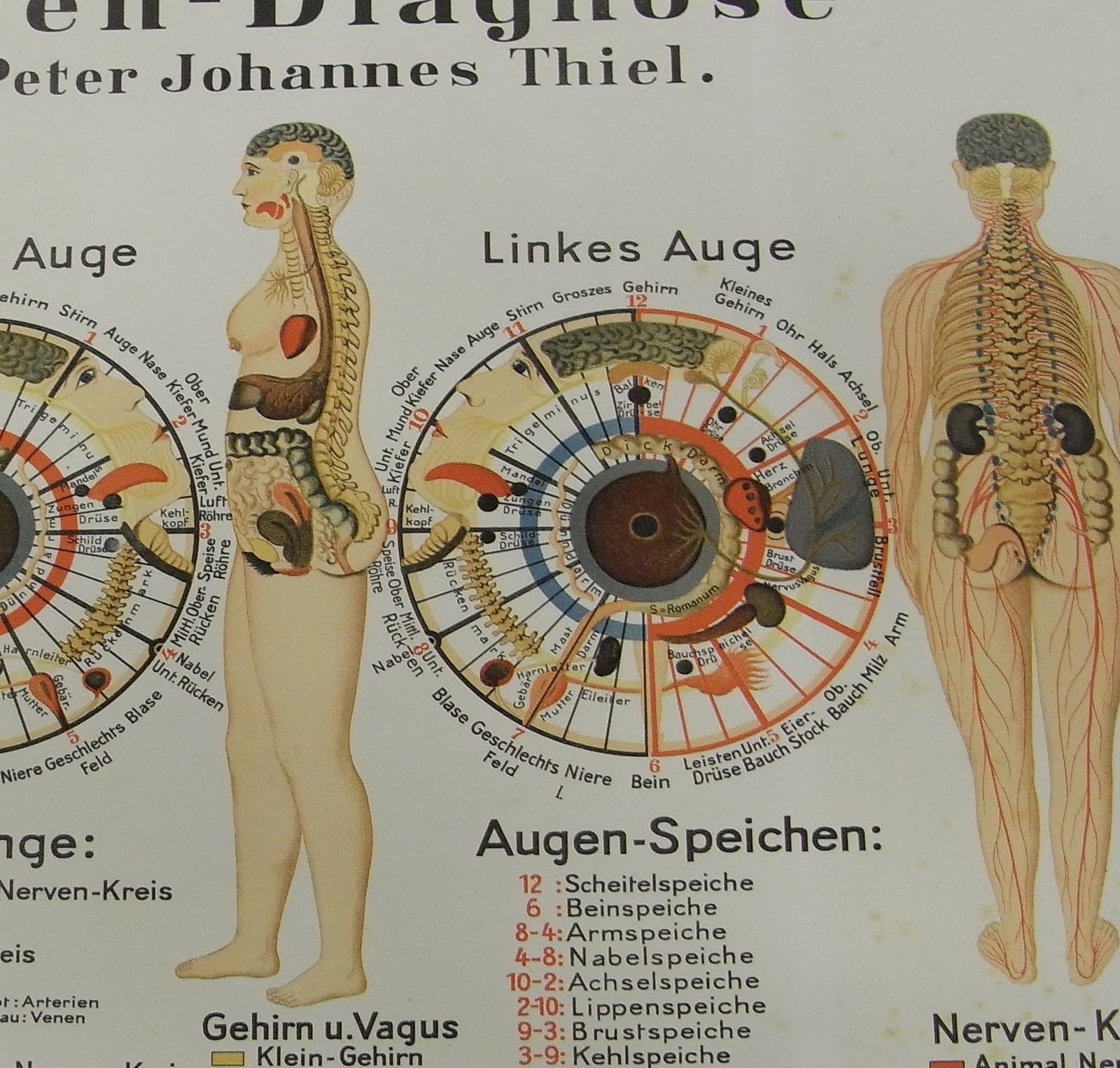
One of our hardworking volunteers, Louise, has recently completed cataloguing the Papers of Amelia Nyasa Laws (our ref: GD18). Dr Laws had a widely travelled and varied life and career. Born in 1886 in Nyasaland (now Malawi), she was educated in Edinburgh and Rome. She worked as a masseuse in a French field hospital in the First World War then later worked in the Royal Infirmary of Edinburgh. She graduated from the University of Edinburgh with an MB ChB in 1930. She did further training in Physiotherapy in Brussels, Orthopaedics in Hanover and specialised in Osteopathy in London. She practiced as an Osteopath in London until her retirement in 1959 and after this she lived in Edinburgh where she still continued to receive patients until the age of 90. She died in 1978. The collection comprises of Amelia’s case notes, lecture notes, glass plate negatives, anatomical charts, objects, books and personal effects. The completion of the cataloguing of these documents means that all of Dr Laws’ papers are now more accessible for future generations to learn about her story.

Part of chart showing sections of the iris (GD18/10/9)
Dr Laws took a keen interest in iridology (often examining the eyes of her patients).  Above is part of a coloured chart showing sections of the iris and its relationship to parts of the human body (part of GD18/10/9), which was published by Krüger and Co. in 1924. Included in the collection are Dr Laws’ handwritten notes regarding this chart dating from 1924-1929.

Friday, 12 August 2011

User services update

Up to the end of July this year we’ve had 80 readers who between them have made nearly 200 visits and consulted 951 items! Our readers have come from all over the UK and Ireland, from mainland Europe and further afield from the USA, Australia and Canada. A wide range of topics have been researched: students from Edinburgh College of Art have used Archive material to inspire their artwork to be displayed in the forthcoming Unsung Heroes exhibition (see blog of 13th May), records of the Edinburgh Royal Maternity Hospital have been used as part of a birth weight study to examine the effects of birth weight, amongst other things, on cognitive ability in old age. We’ve also had retired nurses looking at their nurse training records from the 1940s and 1950s; it’s often a shock for them to see the comments made by the matron, or a photo of their younger selves! LHSA shares reading room facilities at the Centre for Research Collections, Edinburgh University Library which offers a bright, modern area in which to consult records and is free to use.

An item recently consulted in the reading room (from the Royal Edinburgh Hospital Physician Superintendents' collection)

We’ve also received 356 remote enquiries, usually by email or through our website, from all corners of the globe. There are requests for images of our material to be used in publications, guidance on records retention schedules for NHS staff, advice on conservation and a whole host of academic and local history queries. These have come from a wide range of sources including the NHS, the media, other archive services, students and academics. Many enquiries are from family historians looking for information on an ancestor’s stay in hospital, or as an employee of a hospital. No two enquiries are the same and they provide an opportunity for staff to learn more about the material held in the Archive and to develop research techniques.

To make an appointment to view LHSA records, please email us at lhsa@ed.ac.uk or call on tel: 0131 650 3392