Showing posts with label Feminism. Show all posts

Friday, 28 April 2017

Lothian Gay and Lesbian Switchboard

This week our Skills for the Future trainee, Samar, will be sharing information and material from the Lothian Gay and Lesbian Switchboard archive with you…

At LHSA, we hold the archive for the Lothian Gay and Lesbian Switchboard, which includes material such as newspaper and magazine clippings, call logs, related research, promotional and fundraising material, correspondence and minutes. The Switchboard is worth celebrating, because it has protected and cared for LGBT+ people in our city for over forty years. When it was founded in 1974, the Switchboard’s primary function was to offer assistance and information to anyone who had experienced difficulties as a result of their own homosexuality or the homosexuality of a family member or other associate.


Lothian Gay and Lesbian Switchboard logos (left: 1970s, right: 1994) [Acc 09/021, Acc 09/027]

By 1984, the Switchboard had become the first LGBT+ charitable trust in Scotland, and moved into its own premises in central Edinburgh. Women’s charities soon provided funding for a separate women-only line to be added to switchboard as the Lesbian Line, altering the Switchboard’s name to the ‘Gay Switchboard and Lesbian Line’. The Gay Switchboard and Lesbian Line was, and continues to be, entirely staffed by volunteers, all of whom are LGBT+, because the charity feels that those who are a part of the LGBT community are in the best position to assist others with problems concerning sexuality. 


Literature found in the Lothian Gay and Lesbian Switchboard archive [Acc 09/021, Acc 09/027]

When the Switchboard was founded, phone calls would typically be on topics such as: HIV and AIDS, bereavement issues, sexual abuse, the laws governing homosexuality, sexually transmitted diseases, safe sex practices, coping with stress, how to come out of the closet, drug and alcohol abuse, reconciling their religion with their sexuality, dealing with harassment and abuse at work and at home, homelessness, relationship advice, how to make gay and lesbian friends, and parenting. Sometimes, other gay people just needed to talk with someone who knows what it’s like to be gay or lesbian and who will be able to offer non-judgmental advice and support. There were also calls from concerned friends and family who wanted to learn how best to support their LGBT+ family and friends. Some calls were handled on a one-off basis while others developed ongoing supportive relationships with volunteers from the charity. In 1992, Gay Switchboard and Lesbian line received 6,000 calls between each other.

Literature found in the Lothian Gay and Lesbian Switchboard archive [Acc 09/021, Acc 09/027]

In addition, the Switchboard offered other services and activities besides phone calls, such as a twice-monthly social group (also known as their face-to-face befriending service), fundraising parties, liaison with research groups (providing surveys and results for studies on homosexuality), speakers for talks on homosexuality and training for outside groups on a range of topics to do with homosexuality. The Switchboard also maintained a referral list of professional contacts, which included doctors, lawyers, psychiatrists, clergy and others who have a positive attitude towards homosexuality. The Switchboard also kept a list of ordinary people, such as LGBT+ people in long-term relationships and parents with LGBT+ children, who were willing to share their experiences with others.

Promotional material for a fundraising event held by Lothian Gay and Lesbian Switchboard [Acc 09/021, Acc 09/027]

It is significant to note that the work that Lothian Gay and Lesbian Switchboard did in the 70s, 80s and 90s is still relevant today. Stonewall Scotland, a charity that “supports individuals to work out how they can make a difference for LGBT people at work, home and in their communities”, conducted surveys in 2015 on the experiences of LGBT+ people today. They found that:
  • A quarter (24 per cent) of patient-facing staff working in health and social care have heard colleagues make negative remarks about lesbian, gay or bi people
  • A quarter (26 per cent) of lesbian, gay and bi health staff say they have personally experienced bullying or poor treatment from colleagues in the last five years as a result of their sexual orientation
  • Almost one in 10 (nine per cent) health and social care staff are aware of colleagues experiencing discrimination or poor treatment because they are trans
  • Nearly half (48 per cent) of trans people under 26 said they had attempted suicide, and 30 per cent said they had done so in the past year, while 59 per cent said they had at least considered doing so
  • A quarter (26 per cent) of lesbian, gay and bi workers in all sectors are not at all open to colleagues about their sexual orientation
  • One in eight (13 per cent) lesbian, gay and bi employees in all sectors would not feel confident reporting homophobic bullying in their workplace
  • Nearly half (42 per cent) of trans people are not living permanently in their preferred gender role stated they are prevented from doing so because they fear it might threaten their employment status
  • One in five (19 per cent) lesbian, gay and bi employees in all sectors have experienced verbal bullying from colleagues, customers or service users because of their sexual orientation in the last five years
  • Almost a third of lesbian, gay and bi pupils are ignored or isolated by other people in educational environments
  • More than half (55 per cent) of lesbian, gay and bi pupils have experienced direct bullying in educational environments
Clearly, there is still a lot of work to be done, so that LGBT+ individuals can be treated with the dignity and respect that all individuals deserve. Due to the discrimination that LGBT+ people continue to face today, the Switchboard continues to run as the LGBT Helpline Scotland, offering to confidentially discuss a range of issues including sexuality, coming out, gender identity, relationships and sexual and emotional wellbeing with its callers. It functions as a part of Edinburgh’s LGBT Healthy Living Centre, which was set up in 2003 “to promote the health, wellbeing and equality of lesbian, gay, bisexual and transgender (LGBT) people in Scotland”, providing “support, services and information to improve health and wellbeing, reduce social isolation and stimulate community development and volunteering”. In 2006, the Switchboard also funded Remember When, an oral and community history project which documented the lives and achievements of Edinburgh's LGBT people, past and present. The project resulted in a series of recorded interviews, a book about the history of Edinburgh’s LGBT+ community, an archive held within the social history collections at Edinburgh’s Reminiscence Centre, and an exhibition at City of Edinburgh Council.

Friday, 7 April 2017

Feminist Activism and Scotland's National Childbirth Trust

Our Skills for the Future Trainee will be sharing a bit about our National Childbirth Trust records with you this week…

Hi again, it’s Samar!

At LHSA we hold the archive for the Edinburgh branch of the National Childbirth Trust (NCT), which gives us an insight into women’s experiences of childbirth and maternity care from the early 20th century to the present day. I’ve been cataloguing this collection since January, particularly focusing on the labour reports written by Scottish mothers in the 1960s.

The NCT was founded by a woman called Prunella Briance in 1956. That year, Prunella had lost her baby during childbirth, and was outraged by the way she had been treated by hospital staff during this harrowing experience. As a result, she put an advertisement in The Times newspaper calling for mothers all over the UK to work together to prevent tragedies like this from happening again – and so the NCT was formed.

Our collection holds archive material such as committee minutes, correspondence, birth announcements, newspaper clippings, financial records, event timetables and articles and journals about natural childbirth. Significantly, the collection also holds labour reports written by Scottish mothers about their experiences of childbirth and hospital care. In many of these labour reports, women share unhappy stories of childbirth that ring true with Prunella’s experience.

NCT Committee Minutes Book 1965, featuring a child's drawing [Acc 13/045]

In the labour reports, we learn that many women had gas and air forced upon them against their will:

"I think I may have managed myself had it not been decided otherwise."

“[Hospital staff] told me I was getting too much oxygen from breathing technique - yet in the end had to give me oxygen."

“[I was] half doped throughout."

Babies were taken away from mothers right after giving birth:

"I was disappointed not to be given the baby after birth."

Women were left to labour for hours alone and without beds to lay in:

"I found I wanted to push, and was rather frantic as there were no beds free. All the nurses were very busy.”

Fathers were not permitted in labour wards, even if the mother requested they be allowed:

“… if only husbands could be at delivery."

Angered that so many women shared these experiences, the NCT organised educational classes that would provide expecting mothers with a network of peer support and information on childbirth that they couldn’t get anywhere else. The expectant fathers were heavily encouraged to attend classes with their partners, so that they could help and support the women as they prepared for birth.

The NCT’s classes aimed to make expectant parents better educated on what to expect during childbirth and also promoted natural childbirth techniques based on the teachings of Grantly Dick-Read. These teachings equipped the women with breathing exercises that would help them control their contractions, relax their muscles and get the oxygen they needed when giving birth. Many women also reported that these exercises helped them stay calm and focused during childbirth. Another reason why the NCT encouraged this method was because it helped the women avoid interventions such as inductions, episiotomies (cutting of the perineum) and enemas. This activism was particularly vital, as it was shortly publicised that some doctors were inducing women early during festive periods, to ensure that they wouldn’t have to work during that period.

NCT Committee Minutes Book (II) 1970-1982 [Acc 13/045]
Many women who attended the NCT’s classes reported that they felt relaxed during childbirth, that doctors and hospital staff greatly admired the method, and that in some cases, the women managed to avoid sedation and intervention. Some women even managed to convince staff to let fathers into the wards with them too:

"This nearness to my baby's birth gave me a special kind of excitement and I found that day very useful. I cleaned my house (again); I re-packed my cases (again); and most important of all, I read and read and re-read the sheets of notes I had collected over the months at my relaxation classes."

"... the nurses were very glad to see I was managing to control the contractions. One of them commented that she wished her sister, who was pregnant, could see how well I was managing. I had been trying to tell the other women in the labour ward (4 beds) about the breathing and by this time the ward sounded like a railway station with all the puffing and blowing."

"The pupil midwives were full of praise and said I had done very well. They enjoyed having (my husband) there and said he was a great help. He was given a cup of tea before me!"

"I didn't feel at all tired and would willingly have had another baby the next day."

"Alas, my difficult son decided to make his trip into the world with one hand on his head, which not only made the transitional stage rather painful, but rather hampered his actual delivery. Having said all this, I may say that I feel the training still made all the difference in the world..."

"Both the sister, who recognised the method - and a nurse who stayed with me gave every encouragement and were most impressed."

"Had I not trained under this method, I would have been overwhelmed by genuine pain in back and tummy. It could have been a ghastly time, but I was so glad I had practiced hard and read plenty."

"Midwife told doctor that due to attending breathing and relaxing classes, I was an excellent patient."

"I seem to have rambled on and on but I was pleased to write and tell you of the success of the method - as far as I am concerned. The Doctor said to me this morning that she was sure I wouldn’t have needed the gas and air if (the baby) had been of an average weight and that the nurses and herself thought the breathing was very helpful to them and I was completely relaxed from the waist down."

"It was only the knowledge of controlled breathing and also that I was well on that kept me in control."

The NCT continues to run today, campaigning to improve maternity care and ensuring that better information, services and facilities are provided to new parents. In April 2010, they joined a campaign calling for companies producing baby bottles to stop using Bisphenol A (BPA), a chemical that could leach out of plastics into food or liquid in tiny amounts and be absorbed by the body. The NCT also had a strong influence on The Equality Act, which now gives women in Britain the right to breastfeed in public without being discriminated against. They have also repeatedly lobbied for improved parental leave, supporting campaigns for increased paid maternity and paternity leave.

Friday, 17 February 2017

Interpretation, interpretation, interpretation!

Lately, Samar, our ‘Opening Up Scotland’s Archives’ trainee, has been thinking a lot about ‘interpretation’ within the context of the arts, cultural and heritage sectors, so she thought she would share a bit about what she’s been learning with you…

In the month of February, I’ve focused on all things interpretation: beginning a professional development course at the University of Dundee called ‘Outreach and Education: An Introduction to the Promotion of Archives’, attending a professional development workshop at the Victoria and Albert Museum in London called ‘Planning and writing your interpretation’, and next week I’ll be delivering my own outreach workshops for the Festival of Creative Learning called ‘Making History: A Feminist Craft Project’.

As a part of my Dundee course, I read a really interesting publication, A Closer Look (2001), which was written collaboratively between Interpret Scotland and the Scottish Museums Council (now Museums Galleries Scotland). It was written in order to support a policy statement that Scottish Museums Council had outlined at the time, called Museums and Social Justice. The publication includes practical guidelines that should be considered when museum professionals plan their interpretation. On the very first page of the publication it is explained that “the notion of social justice asserts that people have a right of access to the collections and to associated information that museums hold on their behalf”. I agree with this statement, and strongly believe that social justice is integral to every form of interpretation that we plan, from exhibitions and talks to workshops and online content. This is because, interpretation is the key way in which arts, cultural, and heritage organisations can make the most of the meeting between their collection and their visitors, and it is our responsibility to make this meeting as stimulating, rewarding and memorable as possible for every visitor that engages with us.

I attended the V&A course on interpretation this month because I wanted to learn how to write exhibition text that is interesting, engaging and accessible to a wide audience. When planning an exhibition, it is a matter of principle to me that the way in which the material is presented is engaging to any visitor who may attend. This was a daunting task to me, considering exhibition visitors can range from experts in the field to young children. The V&A course reassured me that although this is a difficult task, it is not an impossible one. I learnt that in order to cater to a wide audience, I don’t have to ‘dumb down’ the research or collection that I’m presenting, rather, I have to recognise people’s needs and interests, and use the devices of good writing to communicate my ideas. By good writing, the course instructor didn’t simply mean clarity and proper grammar, but producing a personality, life and rhythm in the text that can appeal to all.

As a heritage professional, interpretation is one of my favourite parts of my role, because it’s a chance for me to share my enthusiasm for our collections with the public. So, I’ve been very excited to get to apply this new knowledge in the planning of my own series of workshops for the University of Edinburgh’s Festival of Creative Learning. When planning my workshops, I wanted to interpret Lothian Health Services Archive’s material in a way that illustrates the role of social justice within the archive sector, as well as diversifying the general public’s understanding of history and heritage.

The materials which archives hold are the foundations from which history is written, and historically, as well as in the present day, women’s achievements and contributions to society have been omitted from archives, and therefore history. In my workshops, I wanted to counteract this damaging effect by working with the public to make sure that the stories that we hold at LHSA about Scottish medical women are written into the canon of history. During both workshops, held on Monday 20th February and Wednesday 22nd February, we will discuss the ways in which archives can be, and have been, used within activism, and then do some feminist activism ourselves by producing a crafty zine that celebrates the achievements of LHSA's medical women. After the two workshops, the zine will be converted into an online booklet which will be shared on this blog and our Facebook page, in order to highlight the significant women in our collections, not only to the participants of our workshops, but to our wider online audience. These workshops have been months in the making, and I can’t wait to get crafty with all of you, so if you’re interested in attending, we still have a few places left, so make sure to sign up soon!

Monday, 10 October 2016

Women and Mental Health

Last week I explored LHSA’s holdings of women’s health materials, and was particularly struck by the Cervical Smear Campaign and Women’s Health collection (GD31). As it’s World Mental Health Day, I thought it would be apt to share what I found in the collection.

The material I was most interested in in GD31 was about an Edinburgh-based feminist mental health project called Head On. Head On was supported by the Scottish Association for Mental Health and was set up as a core part of the Scottish Women’s Health Fair, which took place in Edinburgh in May 1983. The Fair was organised by a group of local women with the backing of the Scottish Health Education Group (SHEG - a civil service department of the NHS), and coincided with a conference on ‘Women and Health’ which was held in Peebles (organised by the World Health Organisation and SHEG). It aimed to take a wide-ranging look at factors affecting the health of women in Scotland and encouraged local participation and input from women’s organisations and groups across Scotland.  The Fair took place at venues across Edinburgh, and involved stalls, exhibitions, workshops, displays, films and discussion groups.   

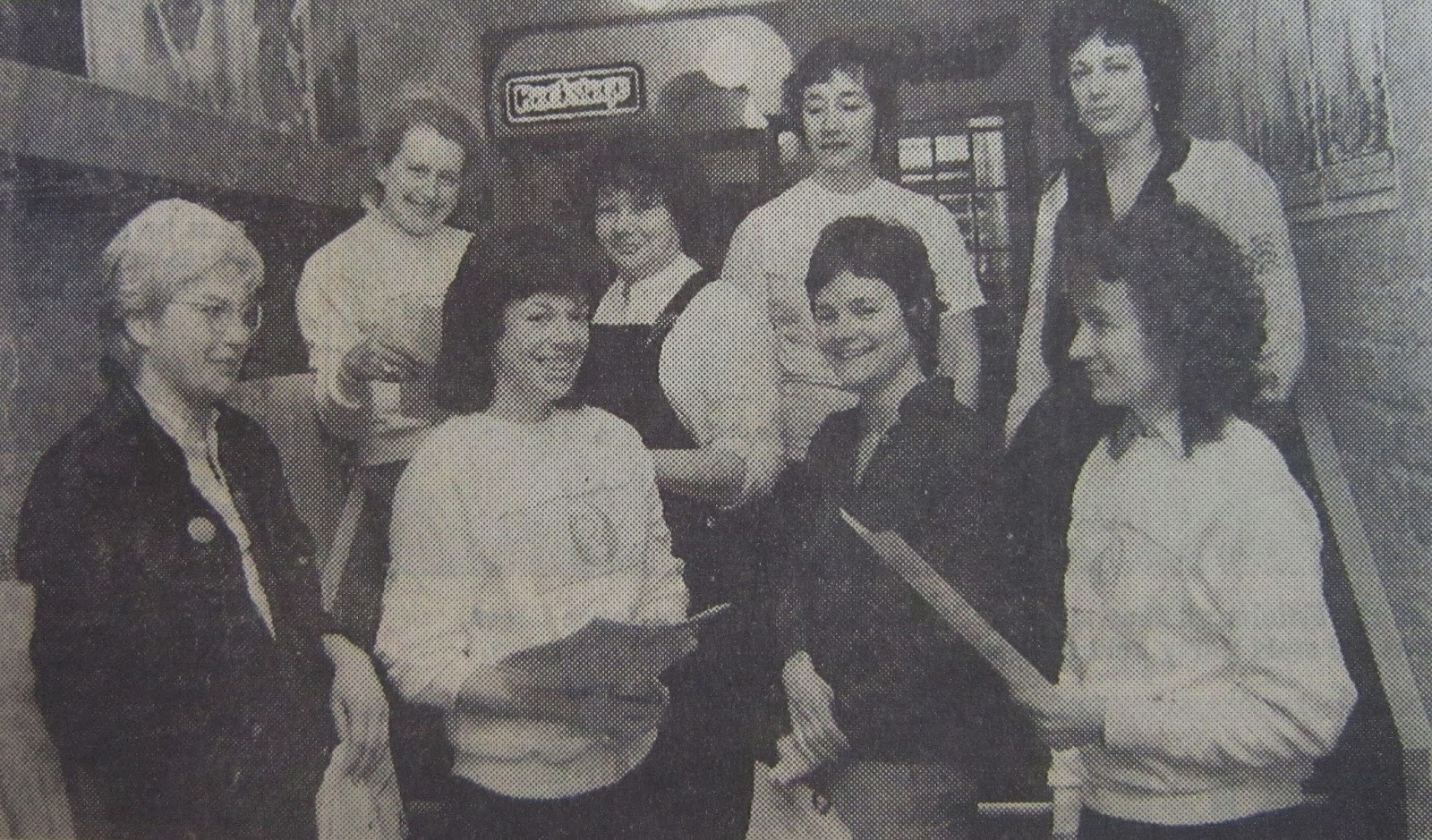
Scottish Women's Health Fair committee members as pictured in a clipping from the Edinburgh Evening News, May 25th 1983 (l - r front: Bernie Graham, Sarah Boyle, Jane Jones, Ginnie Morton; l - r back: Jean Malcolm, Sheila Lochiel, Fay Jacobson, Penny Richardson)

The Head On project wanted to help women become more responsible for their own well being and mental health and to increase awareness of the politics of mental health for women. The holdings we have for Head On consist of meeting minutes, correspondence, planning notes and lists, newspaper clippings, copies of medical articles and journals, and leaflets and booklets made by the women in the organisation. 

Booklets written by members of Head On titled ‘Women and Depression, ‘Women and Anxiety’, ‘Women and Food’, ‘Women and Pills’, ‘Women and Sexuality’ and ‘Women and Smoking’ (GD31/14/1)

Head On’s constitution, which was drafted in 1984, states that the organisation’s objectives were to “set up projects and programmes designed to help women become more aware of their own mental health”, “to educate and inform the public, social services, the media and others with respect to women and mental health”, “to act as a liaison between, and support of, those working in the field of women and mental health” and “to cooperate in appropriate research”. The constitution also highlighted that membership is “open to all persons who are sympathetic to the association’s objectives”. A line found in Head On’s meeting minutes from June 2nd 1983 expresses that Head On “can mean different things for us all but at the heart it stands for our individual shared experience which enables us to reach out across differences to others and to feel better about ourselves”.

The work that Head On carried out in the 80s is still relevant and urgent today. According to a December 2012 Health Inequalities report by AuditScotland, more than twice as many women are consulting GPs for depression and anxiety as compared to men, with those living in the most deprived areas having lower overall mental well-being and more GP consultations for depression and anxiety than those living in the least deprived areas. This echoes the sentiments expressed by the women at Head On, who asserted that “if you are a woman you are more likely to experience depression, have tranquilisers prescribed, or be admitted to a psychiatric hospital than if you are a man”.


Head On booklet, copies of which were distributed at Scottish Women's Health Fair events, held at the Roxburghe Hotel in Edinburgh's Charlotte Square  (GD31/14/2)

The organisation’s earliest projects consisted of two health events, one being a ‘Women and Health Day’ which was held at Edinburgh’s still-existing Workers’ Education Association in 1982, and involvement in the Scottish Women's Health Fair in 1983. These events were primarily targeted at women, but attracted and welcomed people of all genders, including their children. Talks and workshops on women’s mental health were held at these events, and literature written by the group was distributed.

In order to raise funds for their events, Head On organised parties such as the ‘GLITTER GALS DISCO’, which took place at Edinburgh nightclub Buster Brown’s, and charged a £1 entrance fee. Head On’s health fairs and fundraisers were planned through monthly meetings which were open to the public. A mailing list was also created which distributed information, meeting summaries and newsletters to members. During their meetings, the women of Head On delegated tasks to one another, discussed venue hire, drafted applications for funding, presented educational literature and illustrations which they had created to be sold at their events, distributed copies of medical reports and journals concerning women’s health, and most importantly, shared their personal experiences with one another.


Women sharing experiences at a Head On workshop in 1988

Below are some examples of the experiences that women shared at Head On’s meetings:

“We felt we were constantly under pressure to be good at everything, women must be the carers and the experts… there are expectations and assumptions that women will care. We are now seen as a resource by the state. Daughters take over the care of elderly parents, very seldom sons. Society expects women’s natures to be soft, nurturing, emotional, and mothering… Women give emotion but how do they receive it back?” - November 9th 1982

“It is considered a virtue to keep the home spotless. The pressure and the expectations are there all the time. Women should do this and is considered failing if she cannot. Here enters conflict. Her identity depends on doing the job well. She feels she should be at home, but would often rather be doing something else. Many times she feels unfulfilled. She feels unrecognised and underpaid.” - November 18th 1982

The meeting notes which I found most poignant were from January 6th 1983. When the committee asked the women at the meeting what wanted out of life they replied with, “I want peace to be myself”, “I want total economic freedom”, “I want strength to be me”, and “I want to have personal confidence”. When exploring solutions to these wants and desires, some women expressed that “I need enough physical and mental strength to be independent” and “I need to assert myself”. My favourite solution came from a woman who suggested listening to Diana Ross’ “I want muscles” or Joan Armatrading’s “I am a woman”.

Head On meeting notes January 6th 1983 (GD31/10/2/1)

As well as an invaluable record of Head On's own activities, the papers collected by members are a fascinating source of information on grassroots women's health initiatives that existed in parallel, two examples of which particularly stood out to me.

One key example is in evidence of the response to the Scottish Home and Health Department's censorship of a Scottish Health Education Group (SHEG) booklet, Well Woman: A Guide to Women's Health. The Well Woman booklets were to tie in with a BBC women’s health radio and television series of the same name. However, SHEG were asked to withdraw the booklet by the Scottish Home and Health Department, following complaints from a number of Medical Officers of Health across the country. Officials felt that the booklets, which explained how the female body works and dealt with topics such as menstruation and contraception, were “overly concerned with sexuality”. This caused national outrage, landing media coverage from outlets such as The Scotsman and the Guardian, which we know about thanks to clippings kept inside the papers of Head On.* 

Another women's health initiative reflected in the Head On papers is the Women's Health Shop, which operated from February 1983 to June 1984 on the Royal Mile, funded by the Cancer Research Campaign and the Edinburgh Council for Social Service.** The Shop put on displays, held talks and workshops, produced feminist literature of women’s health, and became a meeting place for women to talk to women about women’s issues. Some of the talks and workshops held at the Shop had to do with the ways that menopause, benefits cuts, breast and cervical cancer, pregnancy and motherhood, and nutrition and stress affect women’s mental health. The shop also facilitated self-help groups to meet, providing a space to share experiences of depression and anxiety with other women over coffee. Additionally, women were invited to view the Shop’s monthly displays, which advised how to eat healthily on a low budget, how to make their needs known to their doctors, and how to conduct self-examinations for breast cancer. A female nurse was also available to lend a sympathetic ear for any health worries or anxieties that the women wanted to discuss – this was especially important because many women didn’t feel that their mental health issues were important enough to discuss with their doctors who were largely male. A range of books and resources on women’s health were also made available for loan at the shop.

Although Head On is no longer in action, there are plenty of resources on mental health available online at  Scottish Action on Mental Health, CAPS Independent AdvocacyThe Health Foundation, Mind, Time to Change and Rethink. If you or someone close to you is struggling with mental health issues, please get in contact with your GP.

Samar Ziadat

* For an account of the controversy around the Well Woman booklets as well as a thorough account of the formation and significance of the Scottish Women's Health Fair, see: Patton, K 'The Scottish Women's Health Fair, 1983: A Showcase of the Scottish Women's Health Movement', Health History, 2024 ; 26(2): 73–94. You can access the article online here.

** For more on the Women's Health Shop, see: Robinson, S & Roberts, M, 'A women's health shop: a unique experiment.' British Medical Journal, vol 291, 27 July 1985, pp. 255 - 256. You can access the article online here.