Showing posts with label Mental Health. Show all posts

Friday, 11 August 2017

The Cockenzie Mystery - more insights from the Royal Edinburgh Hospital

We continue our journey into the Royal Edinburgh Hospital case books with our second volunteer blog. This one is from Carmen, a first year history student at the University of Edinburgh.

Since I began volunteering for Lothian Health Service Archives in April of this year, I have discovered a whole new perspective of eighteenth-century psychiatric treatment. Having the opportunity to access the Royal Edinburgh Hospital records has allowed me to have a glimpse of the lives of those who needed said treatment, and also the attitudes towards them.

When I first started cataloguing the volumes I was looking at mostly pauper patients – those whose treatment was funded by their parish – and I really resonated with many of those who found themselves suffering from mental illnesses. There was one patient in particular who stood out to me as she had lost 4 children within the space of a year because of diseases such as tuberculosis and typhoid. I remember thinking that any person would find themselves mentally vulnerable if they had lost so many loved ones in such a short period of time. There were also other records of other women who had been admitted because they had symptoms of what we today would diagnose as postpartum depression. By just looking at these records, it is clear that we have come a long way in terms of both diagnosing and understanding mental health problems. 

Since finishing my first volume, I have now moved onto one of the Hospital’s volumes that was specifically for private patients. What is most interesting about this volume is that because these patients were paying significant sums of money for their treatment, the doctors were more likely to include information about their personality. For example, it was said that one patient was “the most generous of men” and was known for buying magazines and newspapers for everyone in the ward. Others were not described so kindly, with one being labelled as “a moody, taciturn old man” who entertained himself by scribbling on any pieces of paper he could find; and another “sullen” for refusing to speak to any doctor but Dr Clouston, the director of the entire hospital. Another patient was admitted because she had “delusions” that she had been seduced when she was young - whether this was actually a “delusion” or not is questionable. Information like this is invaluable in helping historians understand the lives of those who suffered from mental health issues in a time where knowledge on the subject was limited. If not for these insights from contemporary doctors, we would not know what the people who were treated at these hospitals were really like.

Another interesting discovery I had when looking at these volumes was the fact that many of these patients seemed to go to “Cockenzie” for several weeks at a time, and little else of the place is mentioned. When I brought this up to Alice, the Archive’s Access Officer, she suggested that the patients may have had something like a holiday home - as Cockenzie is by the coast – and may have gone there to get into the open air and get a break from the city. If this is true, this is fascinating as it shows that Clouston could put another of his theories into practice. Dr Clouston was a strong believer that people had to have a positive environment in order to have a positive mind, and he tried to ensure that his patients lived in the best conditions possible because of this. Since volunteering at the archives, I have been fortunate enough to also read several of Clouston’s published works, including one in which he explains that his inspiration for the asylum layout came from a luxurious Swiss hotel. However, as the volume I am cataloguing has not been looked at in much detail yet, the archivists here at LHSA still know little about Cockenzie and what that actually meant for the patients at the Royal Edinburgh Hospital. Nevertheless, that is one of the best things about working in archives and handling contemporary material: we may never know what Cockenzie actually was, but by looking at the records we have in our collection, we do know that it existed and was of some significance to the daily life of the hospital.

Overall, I have loved every minute of volunteering at the LHSA Archives and think it is fantastic that the University offers its students the opportunity to look at the wealth of material that they have in their collection. I have been able to learn even more about the city that I now live in and love, all the while gaining invaluable skills that will prepare me for my dream job in the heritage sector. 

UPDATE:


One of our wonderful Twitter followers has unraveled this mystery for us! Kirsty Nicol (@Kirsty_Nicol) dug into census records for Cockenzie and found a property called Hawthorn Villa, with residents who gave their occupations as Medical Students and one Asylum Matron. She then checked this information against digitised map collections held at the National Library of Scotland, and found that Hawthorn Villa was a property on the Western edge of Cockenzie. This certainly seems like a likely candidate for a convalescent-type home!

Many, many thanks to Kirsty for her outstanding detective work – and what a fabulous example of the benefits of digitising collections!


Tuesday, 1 August 2017

The dangers of tea-drinking: highlights from the Royal Edinburgh Hospital

We're handing over to our volunteers over the next two weeks to hear a little more about the Royal Edinburgh Hospital case book indexing project they've been working on. Starting us off is Iona, who recently graduated with a first-class history degree from the University of Edinburgh. 


Since April I have been helping with the Royal Edinburgh Hospital Case Book indexing project to create a database of patients admitted between 1840 and 1932.  Every week I work on my own volume detailing the cases of women admitted from the late 1850s. I have gleaned amazing details of what these women’s lives were like across social strata within the wider framework of Victorian attitudes towards medicine and gender. Every case illuminates the perception of women’s greater susceptibility to different forms of ‘mania’, many related to life-cycles of puberty, menstruation, childbirth, menopause, and old age.

Working through the case entries, I am very aware of looking at a top-down source; the female patients are viewed through the prism of the medical institution and the men that run it. At times, it is almost as if I am reading a novel with unreliable narrators, trying to prise the text apart to catch a glimpse of the patients’ point of view. Despite this limitation, many stories are harrowing, dramatic, even amusing, with a strong sense of each woman’s individual character. This interplay between the patients’ experiences, the narratives of the medical men, and my own subjective interpretations is fascinating, a unique way of bringing history alive.

The index to casebook volume 13
The intertwining of morality and medicine pervades the volume, from the formulaic language describing patients’ everyday behaviour as ‘industrious’ or ‘slovenly’ to diagnoses of ‘moral insanity’. The unsettling combination of familiarity and strangeness in the way that the doctors evaluate their patients is highly compelling. Through my modern lens, it seems straightforward to identify symptoms of alcoholism, post-partum depression, and the simple need for people to receive more care as they get older. The doctors’ assessment of these cases range from comparatively up-to-date understandings to the down-right odd, my favourite example being the condemnation of dissipation through excessive tea-drinking.

The following are my highlights from my case book volume. I have chosen just a few examples to demonstrate some of the themes I have found particularly interesting during my time at LHSA.

Work, work, work
Each entry makes some reference to the patient’s occupation and class, revealing the social roles of women at the time. The entries often identify patients by their husband’s profession, such as brewer’s wife or sailor’s widow, and if employed are most often domestic servants or seamstresses. I have found tantalising exceptions among these common entries, such as Clara the London stage-dancer and Helen the map-colourist.

In addition, cases like that of 26-year-old Christina reveal contemporary wariness of female education and ambition. Her ‘acute mania’ was caused by ‘something which had excited her beyond ordinary’, which turns out to be ‘the study of composition’ and her attempt to write a novel. This diagnosis connects Christina to many women of the later nineteenth- and early twentieth-century whose literary energies were medicalised in connection to their mental health. Two of the most famous examples of this are Virginia Woolf and Charlotte Perkins Gilman, who both wrote about the frustrations of their medical treatment. In 1882, the Royal Hospital’s own Dr Clouston gave a lecture entitled ‘Female Education from a Medical Point of View’, which demonstrates the widespread disapproval of these developments. He states that new school curricula have ‘warped the woman’s nature, and stunted some of her most characteristic qualities’, not only to the detriment of the female population but to the health of the nation itself. In this way, Christina’s case and Clouston’s lecture hint at how women’s bodies became ideological battlegrounds over medical practice and appropriate gender roles.

Medicine and moral sensibility
The doctors’ descriptions of their patients’ cases frequently act as moral commentaries on their way of life and their place in society. I came across one woman called Mary Ann who used the name Jane as an alias; this factor and her diagnosis of ‘moral insanity’ perhaps hints at a criminal past. Although the previously-mentioned Clara is ‘naturally of a cheerful disposition and steady industrious habits’, the entry notes that ‘employment as a dancer on the stage might not be considered advantageous for this development.’

Instances of alcoholism elicited condemnation as a manifestation of both physical and moral degradation. In another lecture given at the University of Edinburgh, Clouston describes women as more predisposed towards alcohol abuse because they possess ‘less resistive power’, as well as the ‘nervous disturbances incidental to the female sex and to motherhood, and the climacteric period.’ The case of a woman called Flora with an ‘inclination for stimulants’ caused a great deal of trouble for the Hospital as the staff debated over her treatment. After escaping to go drinking, Flora was investigated by the Board of Lunacy and examined by several doctors. When contacted, her family requested that she remain at the Hospital because she was ‘quite unable to keep from drinking and from disgracing herself and them by her conduct’. The Board released Flora, however, because when sober she was ‘not at present a lunatic in the statutory sense and therefore however doubtful they may be as to the manner in which [she] may comport herself when free from control they have no alternative but to order her discharge.’
LHB7/51/13
As the previous cases show, most often the entries convey the attitudes of the hospital staff, yet some details display the strong moral compass of the patients’ themselves. Helen was engaged to a ‘respectable young man’ but ‘began to entertain fears that…he was not a Christian.’ This led her to postpone the marriage but ‘the delay of her lover in assuming the Christian character threw her into a deep melancholy.’ Interestingly, her postponed marriage also led Helen to ‘adopt the idea of going as a missionary to the Indians.’ I like to think that perhaps her work as a map-colourist encouraged her desire to travel as well as her deep religious sensibilities.

The cup that cheers and inebriates
One of the most bizarre attributed causes of mania I have found in my casebook is the effect of excessive tea-drinking. For example, another patient called Christina sought refuge ‘in the inordinate imbibition of tea, which she takes in the form of a strong decoction several times a day’, a good summary of my own tea habit.

LHB7/51/13 - when tea drinking becomes a threat to health...
The case of Joan, a dressmaker from Glasgow, also hints at a class dimension that may have influenced the doctors’ attitudes towards her tea consumption. The record states: ‘She has led a very unhealthy life, having subsisted like many of her class almost entirely on tea taken at every mealtime and seldom supplemented by more than bread and butter, and the occasional salt herring.’ Like Christina, Joan’s ‘indulgence in tea seems in her case to have amounted to dissipation, leaving her, after the stimulant effects pass off, in a state of considerable depression.’

As with alcoholism, the risks of tea were linked to women’s natural weakness and susceptibility. This is also suggested by an article entitled ‘The dangers of tea drinking’ by a Dr J E Cooney published in the Windsor Magazine in 1895. Cooney writes: ‘Warm tea-drinking is very popular with women, and is quite an institution in this country. It is drunk at all hours – even before rising in the morning – but the climax is reached at about 4pm. Many, in the course of paying their afternoon calls, drink no less than a dozen cups of tea…that one is naturally left in astonishment of the depravity of their sense of taste, without contemplating the terrible consequent ravages their respective constitutions must inevitably undergo.’ To me, Cooney’s focus on women’s daily social rituals conveys a sense of uneasy disdain not just for tea drinking but for codes of female behaviour in general. This is heightened by the next paragraph, evoking the image of a deviant female cult: ‘Tea-water worship, carried on by its fair devotees in the prettiest of drawing-rooms, in the smartest of tea-gowns, with the daintiest of paraphernalia in the form of silver and china, may to a large extent disarm them as to the real nature of this insidious but implacable fiend, but nevertheless it is there.’ The article further reinforces the dangers of this ‘implacable fiend’ through its illustrations, which juxtapose rough men drinking from bottles on the street with well-dressed women before trays and teacups. Although this connection of tea with ill-health and morality is funny with hindsight, it provides a fascinating example of how medical attitudes could be bound up with ideas of class and gender.

This blog has been only a small taster of the remarkable stories of women admitted to the Royal Edinburgh Hospital in the nineteenth-century. My attitudes towards history have been greatly enriched by this experience; I have thought much harder about the many filters that lie between the past and present, and about my own subjectivity as a researcher. I encourage anybody interested to volunteer with LHSA for the privilege of spending time with these fractured but powerful voices of history.

Link

J E Cooney, ‘The dangers of tea drinking’, The Windsor Magazine 2 (1895), pp. 218-22, https://search-proquest-com.ezproxy.is.ed.ac.uk/docview/4139113?accountid=10673&rfr_id=info%3Axri%2Fsid%3Aprimo
x

Friday, 3 February 2017

The REH and causes of insanity

The first Physician Superintendent of the Royal Edinburgh Hospital (REH), Dr William Mackinnon, initiated a practice of keeping detailed case notes for individual patients. These case notes have been bound into large volumes, and are now known by the shelfmark LHB7/51. They provide us with a rich resource for examining how attitudes to the causes of mental illness changed throughout the 19th century.

LHB7/51/1 - The first volume of casenotes kept by the REH.

When an individual was admitted to the hospital certification papers would be produced. This was ‘a complicated procedure which involved with coordination of petitioners, medical men and legal representatives'[1]. These certification papers often described why admission was considered necessary – such as the patient posing a threat to themselves or others – and usefully for family historians, they can also carry a bit of information about the family’s medical history.
LHB7/52/633 - This note accompanied the patient's certification papers.

These papers were legal documents: the hospital was legally stating they had the resources to board, feed and care for the patient; medical professionals were legally affirming the medical need for the patient to be admitted; and someone was legal agreeing to pay the costs of care – in the case of private patients this was usually a relative, whereas pauper patients were paid for by the local authority.

In contrast to these structured and regulated documents, the first casebooks of the REH were freeform, and physicians recorded what they felt to be most necessary to understand and describe a patient’s mental state and the cause of their illness. For example, money matters were considered to be the cause of this woman’s melancholia:

LHB7/52/633
In 1846, the post of Physician Superintendent was taken up by David Skae (1814-1873). In the spirit of the Victorian passion for taxonomies, Skae was concerned throughout his career with the classification of insanity, approaching the subject from a physiological perspective rooted in a belief in the ‘physical basis of all insanity’[2]. Over the course of seventeen years, Skae developed a theory of classification that grouped the ‘varieties of Insanity…in accordance with the natural history of each’.


Skae's 'classifications'. Held by the University of Glasgow and accessible on the Internet Archive.
Some of these classifications strike us immediately as being firmly rooted in Victorian attitudes to morality, sexuality and gender roles. For example, in his address to the Royal College of Physicians of London in 1863, Skae described ‘Masturbatory Insanity’ as a condition in which “that vice produces a group of symptoms which are quite characteristic and easily recognised, and give to the cases a special natural history; the peculiar imbecility and shy habits of the very youthful victim; the suspicion, and fear, and dread, and suicidal impulses, and palpitations, and scared look, and feeble body of the older offenders, passing gradually into Dementia or Fatuity”; ‘post-connubial Mania’, was “occasionally met with, both in the male and female sex, but more frequently, I think, in the latter, developed immediately after marriage and, without doubt, connected with the effect produced upon the nervous system by sexual intercourse”; and of ‘Satyriasis and Nymphomania’ no description was offered.

Skae died in post in 1873 and his although his successor, Thomas Clouston, continued the practice of keeping detailed case notes, he did make some changes. In 1874 the case books moved from the freeform blank pages to pro-forma printed pages, requiring the physicians to provide pre-specified areas of information. These went into a great deal more detail that had previously been seen – I particularly like that information was recorded on a patient’s appearance.

This new style of case note also supplied a place in which to record Skae’s classification. This approach was largely ignored in the medical community and never really took hold outside of the REH, but the inclusion of it here allows us to examine not only what ‘disease’ patients were diagnosed with, but how the manifestations of their illness tell us something about 19th century attitudes to the causes of mental illness. By the early 20th century this section had begun to be left blank, and by was eventually removed from the proforma.
LHB7/51/107. Skae's classification is no longer asked for,
and the notes are sparse. 
As the number of patients admitted to the REH increased, the instances of these pages being left blank or only partially completed also increased. Faced with high demands on their time, physicians and clerks were not able to spend as long filling in detailed notes for each patient, and so we’re left with sometimes frustrating ‘teases’ of records such as these – this is a good reminder that, in the archive, an absence can speak as loudly as a presence.


[1] Barfoot, Michael, and A. W. Beveridge. "Madness at the crossroads: John Home's letters from the Royal Edinburgh Asylum, 1886–87." Psychological medicine 20, no. 02 (1990): 265.
[2] Fish, Frank. "David Skae, MD, FRCS: founder of the Edinburgh School of Psychiatry." Medical history 9, no. 01 (1965): 42.

Monday, 10 October 2016

Women and Mental Health

Last week I explored LHSA’s holdings of women’s health materials, and was particularly struck by the Cervical Smear Campaign and Women’s Health collection (GD31). As it’s World Mental Health Day, I thought it would be apt to share what I found in the collection.

The material I was most interested in in GD31 was about an Edinburgh-based feminist mental health project called Head On. Head On was supported by the Scottish Association for Mental Health and was set up as a core part of the Scottish Women’s Health Fair, which took place in Edinburgh in May 1983. The Fair was organised by a group of local women with the backing of the Scottish Health Education Group (SHEG - a civil service department of the NHS), and coincided with a conference on ‘Women and Health’ which was held in Peebles (organised by the World Health Organisation and SHEG). It aimed to take a wide-ranging look at factors affecting the health of women in Scotland and encouraged local participation and input from women’s organisations and groups across Scotland.  The Fair took place at venues across Edinburgh, and involved stalls, exhibitions, workshops, displays, films and discussion groups.   

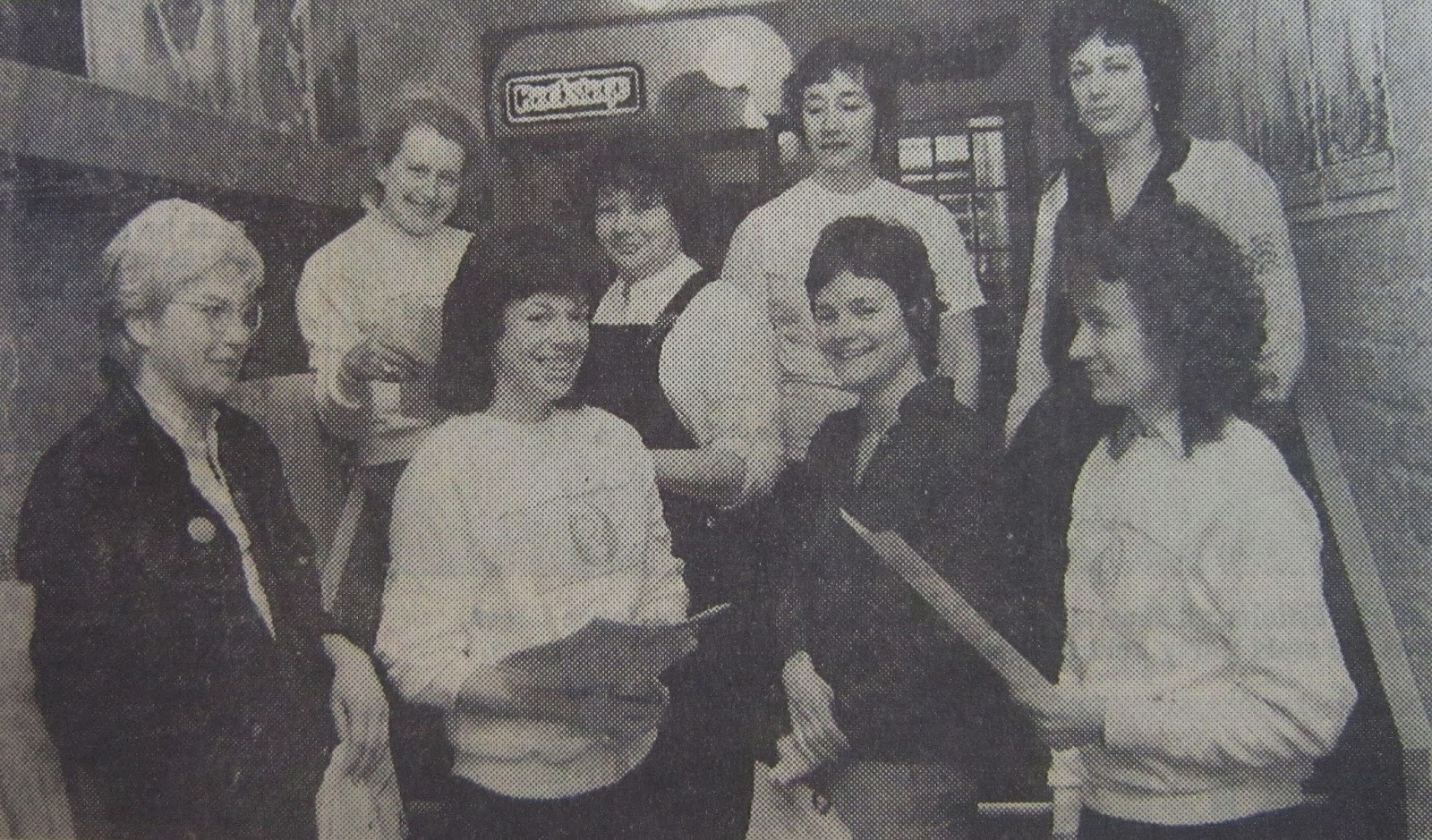
Scottish Women's Health Fair committee members as pictured in a clipping from the Edinburgh Evening News, May 25th 1983 (l - r front: Bernie Graham, Sarah Boyle, Jane Jones, Ginnie Morton; l - r back: Jean Malcolm, Sheila Lochiel, Fay Jacobson, Penny Richardson)

The Head On project wanted to help women become more responsible for their own well being and mental health and to increase awareness of the politics of mental health for women. The holdings we have for Head On consist of meeting minutes, correspondence, planning notes and lists, newspaper clippings, copies of medical articles and journals, and leaflets and booklets made by the women in the organisation. 

Booklets written by members of Head On titled ‘Women and Depression, ‘Women and Anxiety’, ‘Women and Food’, ‘Women and Pills’, ‘Women and Sexuality’ and ‘Women and Smoking’ (GD31/14/1)

Head On’s constitution, which was drafted in 1984, states that the organisation’s objectives were to “set up projects and programmes designed to help women become more aware of their own mental health”, “to educate and inform the public, social services, the media and others with respect to women and mental health”, “to act as a liaison between, and support of, those working in the field of women and mental health” and “to cooperate in appropriate research”. The constitution also highlighted that membership is “open to all persons who are sympathetic to the association’s objectives”. A line found in Head On’s meeting minutes from June 2nd 1983 expresses that Head On “can mean different things for us all but at the heart it stands for our individual shared experience which enables us to reach out across differences to others and to feel better about ourselves”.

The work that Head On carried out in the 80s is still relevant and urgent today. According to a December 2012 Health Inequalities report by AuditScotland, more than twice as many women are consulting GPs for depression and anxiety as compared to men, with those living in the most deprived areas having lower overall mental well-being and more GP consultations for depression and anxiety than those living in the least deprived areas. This echoes the sentiments expressed by the women at Head On, who asserted that “if you are a woman you are more likely to experience depression, have tranquilisers prescribed, or be admitted to a psychiatric hospital than if you are a man”.


Head On booklet, copies of which were distributed at Scottish Women's Health Fair events, held at the Roxburghe Hotel in Edinburgh's Charlotte Square  (GD31/14/2)

The organisation’s earliest projects consisted of two health events, one being a ‘Women and Health Day’ which was held at Edinburgh’s still-existing Workers’ Education Association in 1982, and involvement in the Scottish Women's Health Fair in 1983. These events were primarily targeted at women, but attracted and welcomed people of all genders, including their children. Talks and workshops on women’s mental health were held at these events, and literature written by the group was distributed.

In order to raise funds for their events, Head On organised parties such as the ‘GLITTER GALS DISCO’, which took place at Edinburgh nightclub Buster Brown’s, and charged a £1 entrance fee. Head On’s health fairs and fundraisers were planned through monthly meetings which were open to the public. A mailing list was also created which distributed information, meeting summaries and newsletters to members. During their meetings, the women of Head On delegated tasks to one another, discussed venue hire, drafted applications for funding, presented educational literature and illustrations which they had created to be sold at their events, distributed copies of medical reports and journals concerning women’s health, and most importantly, shared their personal experiences with one another.


Women sharing experiences at a Head On workshop in 1988

Below are some examples of the experiences that women shared at Head On’s meetings:

“We felt we were constantly under pressure to be good at everything, women must be the carers and the experts… there are expectations and assumptions that women will care. We are now seen as a resource by the state. Daughters take over the care of elderly parents, very seldom sons. Society expects women’s natures to be soft, nurturing, emotional, and mothering… Women give emotion but how do they receive it back?” - November 9th 1982

“It is considered a virtue to keep the home spotless. The pressure and the expectations are there all the time. Women should do this and is considered failing if she cannot. Here enters conflict. Her identity depends on doing the job well. She feels she should be at home, but would often rather be doing something else. Many times she feels unfulfilled. She feels unrecognised and underpaid.” - November 18th 1982

The meeting notes which I found most poignant were from January 6th 1983. When the committee asked the women at the meeting what wanted out of life they replied with, “I want peace to be myself”, “I want total economic freedom”, “I want strength to be me”, and “I want to have personal confidence”. When exploring solutions to these wants and desires, some women expressed that “I need enough physical and mental strength to be independent” and “I need to assert myself”. My favourite solution came from a woman who suggested listening to Diana Ross’ “I want muscles” or Joan Armatrading’s “I am a woman”.

Head On meeting notes January 6th 1983 (GD31/10/2/1)

As well as an invaluable record of Head On's own activities, the papers collected by members are a fascinating source of information on grassroots women's health initiatives that existed in parallel, two examples of which particularly stood out to me.

One key example is in evidence of the response to the Scottish Home and Health Department's censorship of a Scottish Health Education Group (SHEG) booklet, Well Woman: A Guide to Women's Health. The Well Woman booklets were to tie in with a BBC women’s health radio and television series of the same name. However, SHEG were asked to withdraw the booklet by the Scottish Home and Health Department, following complaints from a number of Medical Officers of Health across the country. Officials felt that the booklets, which explained how the female body works and dealt with topics such as menstruation and contraception, were “overly concerned with sexuality”. This caused national outrage, landing media coverage from outlets such as The Scotsman and the Guardian, which we know about thanks to clippings kept inside the papers of Head On.* 

Another women's health initiative reflected in the Head On papers is the Women's Health Shop, which operated from February 1983 to June 1984 on the Royal Mile, funded by the Cancer Research Campaign and the Edinburgh Council for Social Service.** The Shop put on displays, held talks and workshops, produced feminist literature of women’s health, and became a meeting place for women to talk to women about women’s issues. Some of the talks and workshops held at the Shop had to do with the ways that menopause, benefits cuts, breast and cervical cancer, pregnancy and motherhood, and nutrition and stress affect women’s mental health. The shop also facilitated self-help groups to meet, providing a space to share experiences of depression and anxiety with other women over coffee. Additionally, women were invited to view the Shop’s monthly displays, which advised how to eat healthily on a low budget, how to make their needs known to their doctors, and how to conduct self-examinations for breast cancer. A female nurse was also available to lend a sympathetic ear for any health worries or anxieties that the women wanted to discuss – this was especially important because many women didn’t feel that their mental health issues were important enough to discuss with their doctors who were largely male. A range of books and resources on women’s health were also made available for loan at the shop.

Although Head On is no longer in action, there are plenty of resources on mental health available online at  Scottish Action on Mental Health, CAPS Independent AdvocacyThe Health Foundation, Mind, Time to Change and Rethink. If you or someone close to you is struggling with mental health issues, please get in contact with your GP.

Samar Ziadat

* For an account of the controversy around the Well Woman booklets as well as a thorough account of the formation and significance of the Scottish Women's Health Fair, see: Patton, K 'The Scottish Women's Health Fair, 1983: A Showcase of the Scottish Women's Health Movement', Health History, 2024 ; 26(2): 73–94. You can access the article online here.

** For more on the Women's Health Shop, see: Robinson, S & Roberts, M, 'A women's health shop: a unique experiment.' British Medical Journal, vol 291, 27 July 1985, pp. 255 - 256. You can access the article online here.